

Comma Sutra
Don't even start me on splices.

There I was, driving along and minding my own business, when I was pushed, provoked, and goaded into the worst case of road rage I’ve experienced since that time my snack fell under the seat.
It all happened so fast, right in the middle of an otherwise innocuous podcast.
The guest said—and I quote verbatim from anger if not from memory—something something something about where the Oxford comma goes (at the end of a list of three or more items). “And”—the implicating follow-up, dropped in as an aside, a quip, and an affront—“the Oxford comma needs to go.”
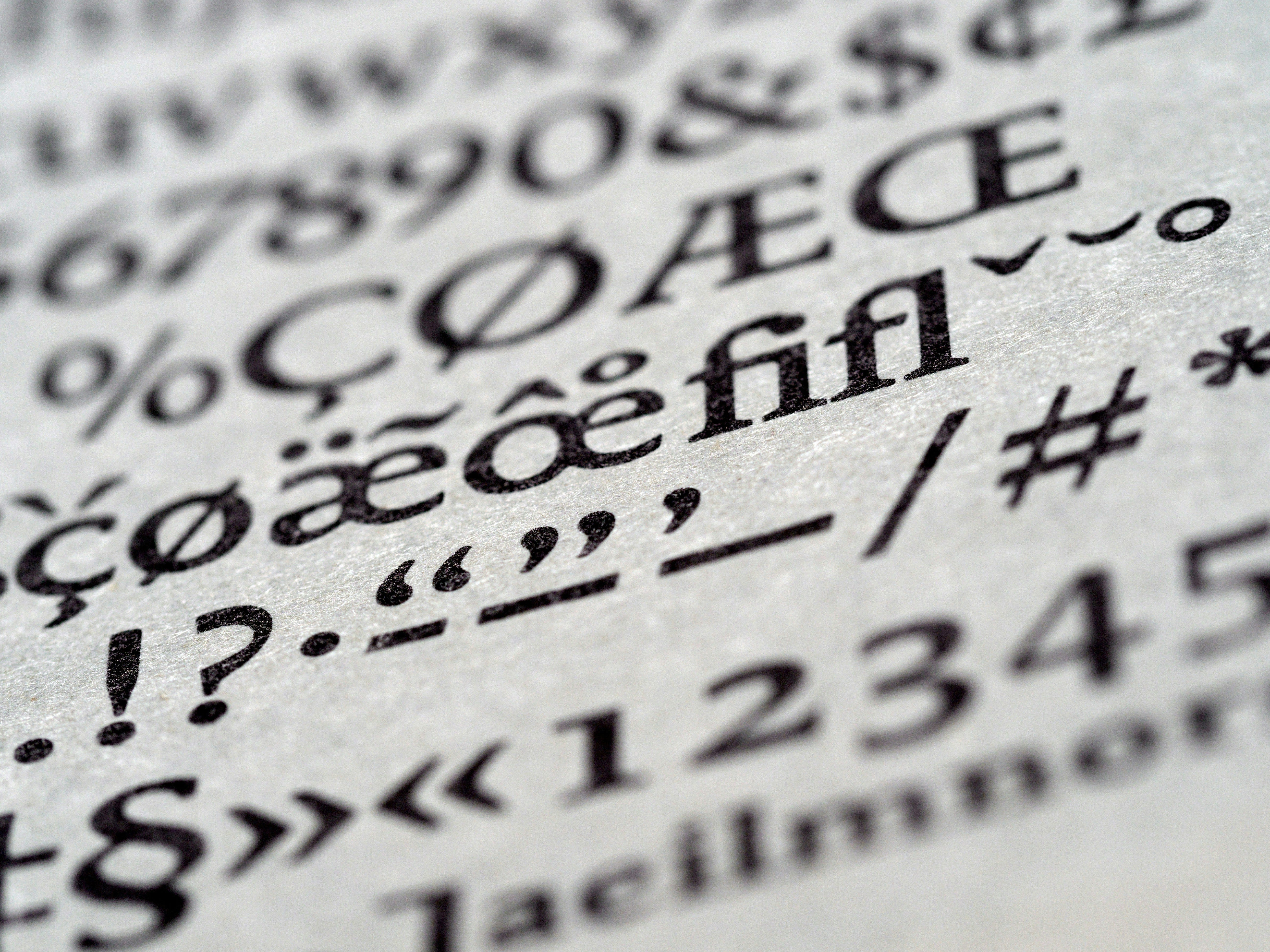
It needs to go?
First of all, yes, the sorts of podcasts I listen to discuss punctuation marks enough to drop snide remarks about them.
Second of all, the Oxford comma is a magical dot with a little tail that together create clarity and disambiguate meaning in writing. Speech has intonation and rhythm; writing has punctuation; and, among its punctuated peers, the Oxford comma is elegant.
I white-knuckled it down the interstate. This podcast guest (whose name I will not utter here) was not a journalist. Journalists, and their editors, receive special dispensation on their comma usage. If I had to write in a one-inch-wide column on a regular basis, I’d eliminate much more than punctuation. Spaces would have to go too.
No, this guest was an author and a publisher—two clans to which I belong and which I thought, believed, and hoped were unified behind this one tiny mark. Remove an Oxford comma, and nothing might happen—or, you might have just slipped the pin from a grenade right in the middle of a sentence about to be blown to bits.
Take this heartwarming sentence:
The student reads weekly to the inmates, her mom, and her dad.
This right here is a young person engaged with her community and her own literacy. The future is bright for her. She has the Oxford comma and probably, like, a 34 ACT on her side.

Now, take this same sentence and extinguish the light within:
The student reads weekly to the inmates, her mom and her dad.
This here is a young person forced into a premature adulthood. With no parents at home, she is likely subsisting on other students’ lunches, which she acquires piecemeal in exchange for doing their homework (and thus putting her admirable and statistically unlikely literacy to use). Except now, with the advent of AI, she is losing her last remaining means of supporting herself, and her mother and father, those wretched inmates, have no real hope of parole after what they did.
Fortunately for me,
I was coasting on a stretch of highway without much in the way of traffic, construction, or a decent cup of coffee while listening to my punctuation homeboy being dragged through the mud. (Mud, because it lacks clarity.) My driving was erratic and I was livid. Not only for this poor young lost-cause student, but for all I consider holy in the world of letters.
If there is one thing going for AI—and as we see above, there ain’t much going for a technology robbing students of the ability to feed themselves in America today—it’s that it reportedly uses the Oxford comma more often than not in its generated texts.
Which might also mean that the bulk of humanity’s published knowledge being plagiarized to generate those texts also uses the Oxford comma more often than not.
And here is this podcast guest, advocating flippantly for authors to make ourselves less clear? To break up relatively functional families and incarcerate parents?
Absolutely not.
I can think of no valid reason today to eliminate the Oxford comma. This isn’t 1967, when the New York Times removed the period from its nameplate to save $600 a year on ink. Let’s be real: your home inkjet printer (if you even still have one) is already and always low on ink. Comma usage isn’t going to change your toner status one way or another. And you have to replace that sucker for something like $600 whether you use it or not.
Before encountering other motorists, I worked to calm myself from my justified and dignified rage. I breathed deeper, fished that snack out from under the seat, and reminded myself that we live in an imperfect world—one where, for example, some competing Cambridge punctuation mark might be lost to time. Even if we rediscovered it, and it solved all our modern-day communication problems, my newspaper editors would remove it on me anyway.
Versions of this piece appeared originally in the Durango Telegraph and the Abiquiú News.
Long live the Oxford comma, road rage, and your inkjet cartridges.
Hint: Inkjet cartridges perform best when you print daily. If you don't, spray some Windex no drip on a Bounty paper towel and wipe the nozzles to clear.
#noiwillnotfixyourprinterunlessyournameiszach
Zach, you never disappoint. Long live the OC!!!